 Medblaze
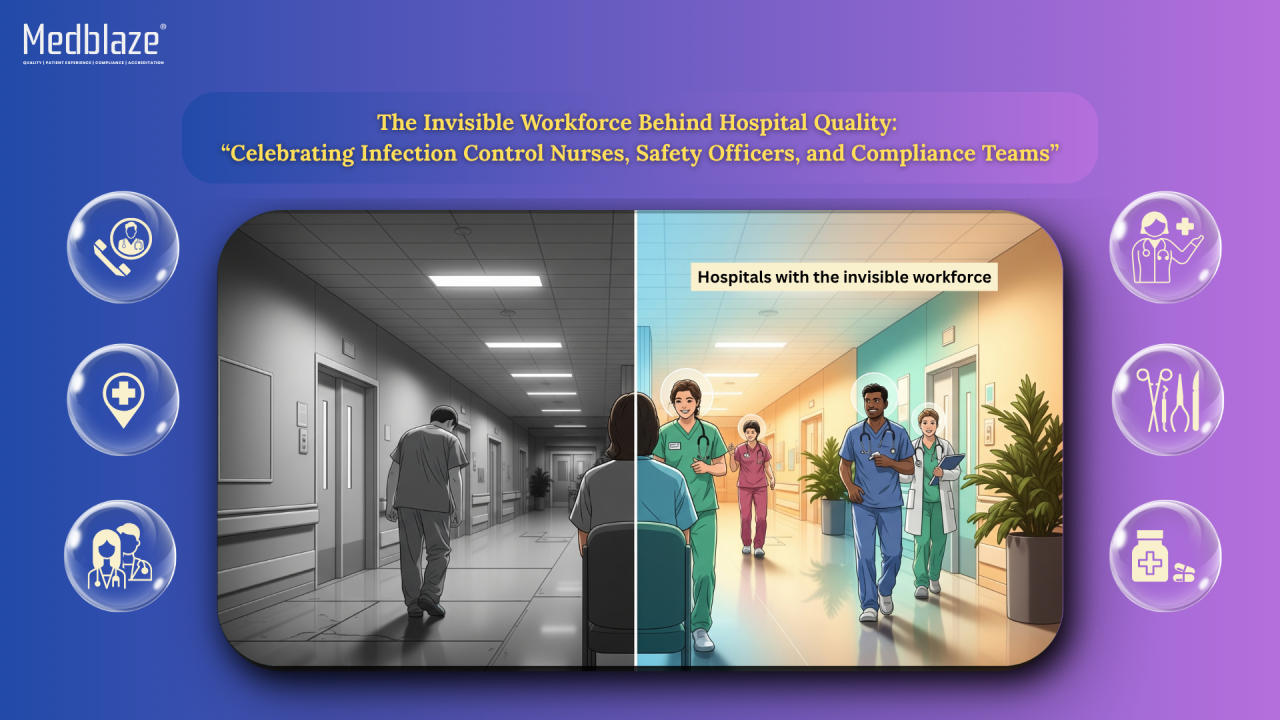
Why the unsung heroes of accreditation deserve our loudest applause
The day the accreditation audit results arrived, the hospital atrium was buzzing with excitement. Management gathered in the lobby, the media covered the story, and a large banner proudly declared: “We are now NABH / JCI Accredited!”
Smiles, congratulatory speeches, and social media posts filled the air. Yet, in the background, a different scene unfolded. A housekeeping supervisor quietly adjusted the positioning of a “Wet Floor” sign near the corridor, something she had been doing for 14 years without fail. In the ICU, a night-shift nurse was completing her rounds, double-checking patient IV lines. The infection prevention officer was reviewing hand hygiene compliance charts, just as diligently as she did before the audit.
These individuals didn’t make it to the photo frame that day. But the truth is, hospital quality and patient safety are built brick by brick on the shoulders of these invisible heroes.
The Orchestra Behind the Curtain
In the public eye, accreditation success is often attributed to leadership vision and clinical excellence. While those are important, a hospital is like an orchestra: the melody of quality is only possible because every instrument plays its part in harmony.
Nurses ensuring each medication is administered with the “five rights”: right patient, right drug, right dose, right route, right time.
Compliance officers who spend weeks ensuring every policy aligns with standards and every license is renewed and compliance met.
Facility managers making sure fire safety equipment is inspected, oxygen lines are functional, and generators kick in during a blackout.
Infection preventionists who don’t just track infection rates but educate staff tirelessly on why “just one missed handwash” matters.
Housekeepers who understand that the difference between a clean floor and a contaminated one could mean the difference between life and death.
A Story from the Corridors
A few years ago, during a mock audit at a mid-sized hospital, the surveyor asked a housekeeping attendant, “Why do you clean patient rooms in a specific sequence?”
Without hesitation, she replied, “We clean from the least soiled to the most soiled area to avoid spreading germs. I learned that from our infection control training.”
She wasn’t reading from a manual; she understood the why. That moment left the surveyor deeply impressed. And that’s when it hit me real quality culture is when the person at the farthest end of the hierarchy is as committed to patient safety as the one at the top.
Why They Deserve Recognition
Unlike doctors whose names appear on prescriptions or leaders whose faces are on press releases, these contributors often remain nameless in public celebration. Yet, when an auditor commends the hospital for zero hospital-acquired infections or impeccable emergency preparedness, it is the culmination of thousands of small, consistent actions by this silent workforce.
A compliance officer once told me, “If we’ve done our job right, no one notices us. If we mess up, everyone will.” That humility is the hallmark of hospital quality work.
Fostering a Culture of Cohesion
Accreditation is not an event; it’s a culture. And culture is built daily, not during audit week. Here are some ways to nurture it:
Celebrate Across All Levels – When accreditation is achieved, have a ceremony where housekeepers, technicians, and security guards share the stage with doctors and administrators.
Share the Stories – Internal newsletters or social media should feature “unsung hero” stories, the infection control nurse who prevented an outbreak, the maintenance staff who fixed a critical issue during a night shift.
Empower Through Training – Don’t limit quality training to senior staff. A well-trained security guard who knows evacuation protocols is as critical as a surgeon in a fire emergency.
Recognize Daily Wins – Create a “Quality Wall” to post photos of staff who made a difference that week, not just during audits.
Flatten the Communication Gap – Encourage feedback from all departments. Sometimes, a junior housekeeper’s observation about equipment placement can prevent a future accident.
The True Measure of Excellence
Accreditation plaques may hang in lobbies, but the real accreditation happens in every patient room, every corridor, and every storeroom, every single day.
The next time you walk past a housekeeper, a maintenance worker, or an infection prevention officer, pause to say thank you. Because without them, there is no quality, there is no safety, and there is no excellence.